Driverless London
Narrative Environment Design

Speculative Design
#Autonomous Mobility #Foresight Visualisation #Shared Mobility #Future Infrastructure
In collaboration with The Autonomy Institute, Driverless London explores how autonomous mobility could reshape the city’s physical and social fabric by 2040. Moving beyond utopian and dystopian extremes, the project envisions London as a pioneering hub for automated transport. Through extensive research and speculative design, it examines the interplay between self-driving fleets, public transport, and urban infrastructure.
By mapping London’s evolving mobility landscape and developing layered visualisations—including environmental, data, and climate perspectives—this project critiques conventional narratives of automation and proposes a more socially and ecologically conscious future.
Scenario
By 2040, the London Autonomous Mobility Company, in collaboration with the City of London, has introduced new autonomous driving regulations, reshaping the city’s streets with one-way operations and a diverse ecosystem of mobility solutions—including self-driving buses, drones, high-speed trains, ferries, and mobile robot deliveries. Rather than displacing drivers, government policies have redefined their roles within the evolving transport system.
Driverless London explores this transformation, depicting how autonomous mobility influences both the physical and social fabric of the city. The project challenges designers to envision a London that is neither utopian nor dystopian, but a pioneering hub of future mobility. Through research, mapping, and speculative visualisation, teams will conceptualise and render dynamic mobility scenarios, offering a nuanced perspective on automation’s impact on urban life.
Concept Development
What is Fleet Hive System?
In 2040, autonomous shared fleets will no longer be merely individual self-driving vehicles but a dynamic, data-driven urban mobility infrastructure.
#Modular #Adaptive #Data-Driven #Community-Oriented

Fleet Hive System vs. Traditional Shared Fleets

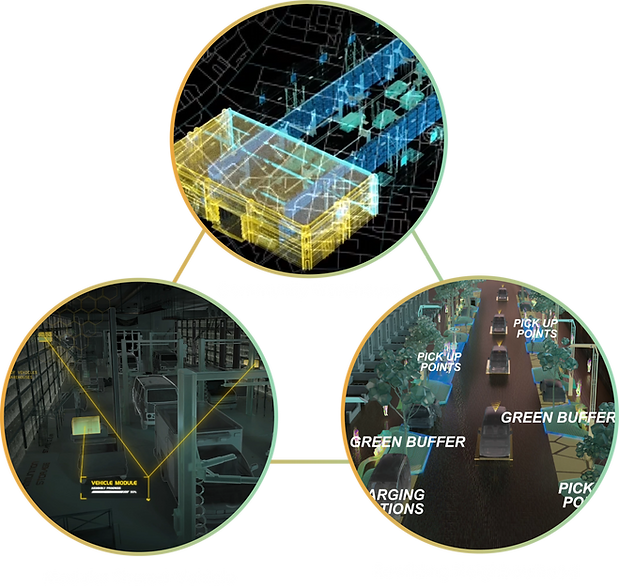
The Constitution and Work Flow
of Fleet Hive System


User Analysis

The Fleet Hive System is designed for a diverse range of users in London’s autonomous mobility ecosystem by 2040. The primary audience includes urban planners, policymakers, and mobility service providers seeking sustainable, data-driven transportation solutions. The user groups consist of commuters, businesses, and local communities, benefiting from flexible transport, last-mile logistics, and mobile infrastructure services.
Peak demand occurs during rush hours (morning and evening commutes), logistics surges (such as retail and food delivery spikes), and emergency scenarios where the modular fleet can be reconfigured for disaster response or public service needs. By dynamically adjusting fleet distribution based on real-time data, the system optimises urban mobility while reducing congestion and emissions.
Bentley Road Car Park Redevelopment:
From Underutilised Space
to Future Mobility and Community Hub
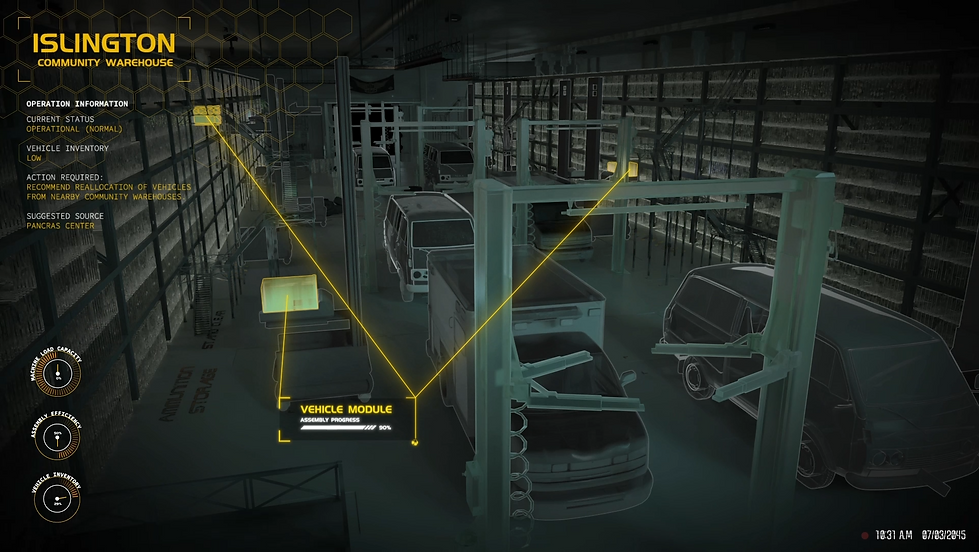
In the Fleet Hive System project, Bentley Road Car Park is reimagined as a multi-functional urban hub, demonstrating how underutilised parking spaces can be repurposed for autonomous mobility and community integration. With declining private car ownership by 2040, the site transforms into a fleet docking and charging station, a community warehouse for last-mile logistics, and a greenery neighbourhood with urban greening to enhance microclimates. This case study highlights the potential of adapting existing infrastructure to create a more sustainable, efficient, and community-driven urban environment.


Biddestone Road Transformation: Integrating Autonomous Mobility, Logistics, and Community Spaces
The Fleet Hive System project reimagines Biddestone Road as a multi-functional urban street, transforming it from a traditional car-dominated space into a hub for autonomous mobility, last-mile logistics, and community engagement. The redesign integrates charging stations, logistics unloading zones, urban greenery, and dedicated social spaces, enhancing both environmental quality and urban efficiency. This transformation demonstrates how streets can evolve to support sustainable mobility while fostering a more liveable and community-driven environment.


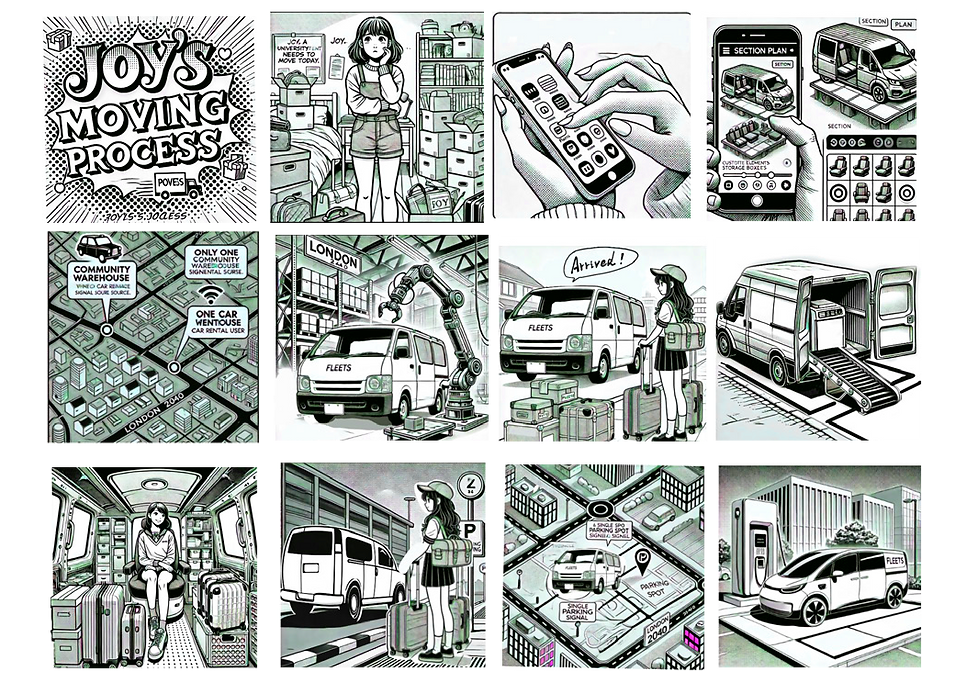
Joy’s Moving Process:
A Seamless Autonomous Logistics Experience in 2040
.png)
Multi-Scale Visualisation: Four Layers of Fleet Hive System Renders
The narrative unfolds from the system’s perspective, subtly implying new job possibilities for drivers in 2040's automated world. This approach allowed us to integrate data and visual information while offering flexibility in camera angles, character acting, and interactivity.
London Scale Interface

Community Scale Interface

Street Scale Interface

Warehouse Scale Interface